How Do Filters Work & What Brita Filters Do
You already know Brita helps turn your tap water into great‑tasting drinking water. But if you’ve ever wondered how that magic actually happens, c’mon—let’s take a look. Here’s a simple breakdown of how our different filter systems work to reduce common impurities in your drinking water.
Brita™ Original Filters
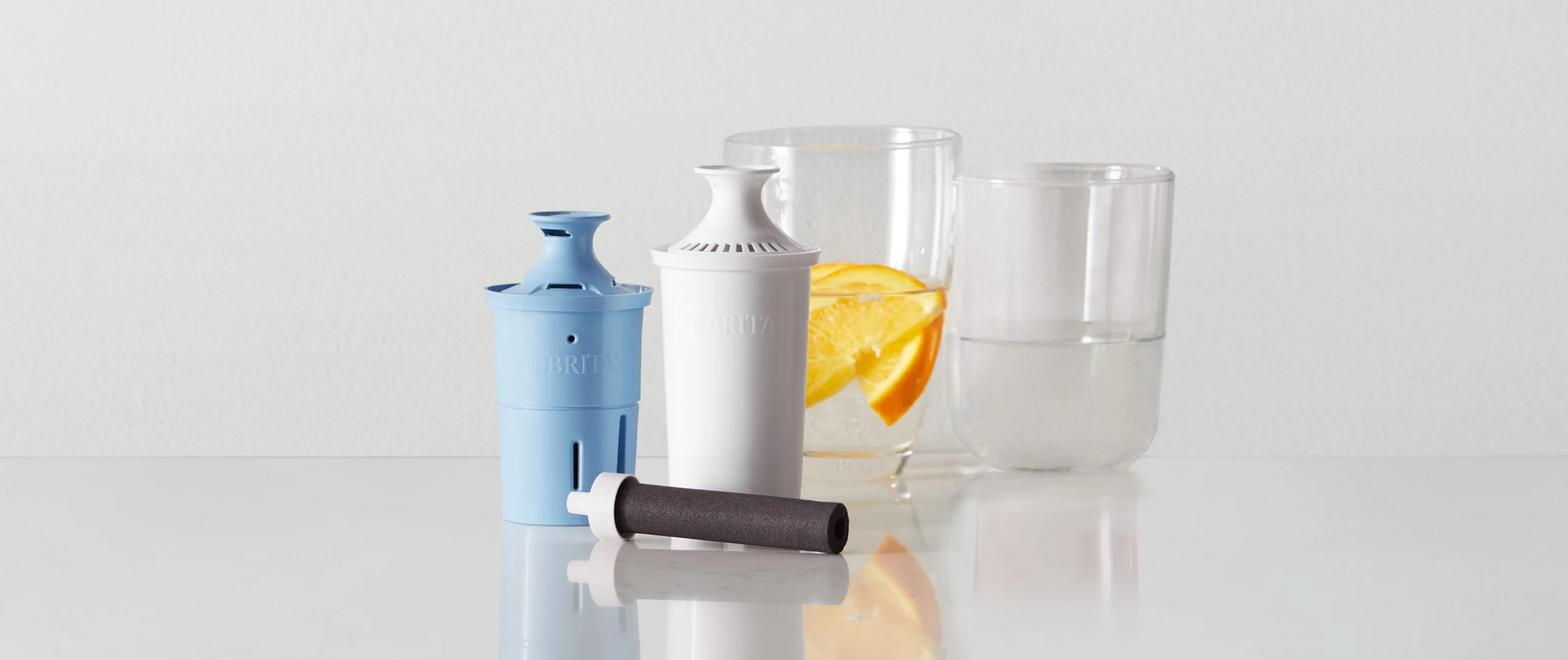
These are the classic white filters made for Brita™ Pitchers and Dispensers—and they do their job in a few smart steps. First, water passes through a built‑in mesh screen that helps prevent black flecks. Then activated carbon granules get to work, acting like a sponge to reduce mercury and chlorine taste and odor. Finally, Ion Exchange Resin steps in to capture copper and cadmium.*
Elite Filters
Looking for longer‑lasting performance? Our Elite Filters fit in Brita™ Dispensers and all Brita™ Pitchers. These blue filters feature a patented pleated media and proprietary active filtering agents reducing 30 contaminants such as lead, asbestos, and cadmium—for up to 120 gallons.† That’s fewer filter changes and more great‑tasting water along the way.
Bottle Filters
On the move? Our Bottle Filters are designed exclusively for Brita™ Bottles, filtering water as you drink. They use a carbon block form to reduce chlorine taste and odor and particulates as water passes through—so you get better‑tasting water wherever the day takes you.†
Faucet Filters
Brita™ Faucet Filters connect right to your tap and use water pressure to push water through nonwoven material and a tightly bound carbon block. As water flows through, the nonwoven element reduces sediment, while the carbon block traps smaller contaminants.* Brita™ faucet filters reduce lead, chlorine, asbestos, benzene, particulates, and other contaminants. See this chart for a complete list of what Brita reduces or removes from tap water.
Keep your filters in peak form
One last thing to keep in mind: Brita™ filters work by trapping and holding contaminants,* so regular replacement is key to maintaining optimum performance. Swap them out on schedule, and you’re good to go.
*Certified by WQA. Substances reduced may not be in all users’ water.
†Substances reduced may not be in all users’ water.