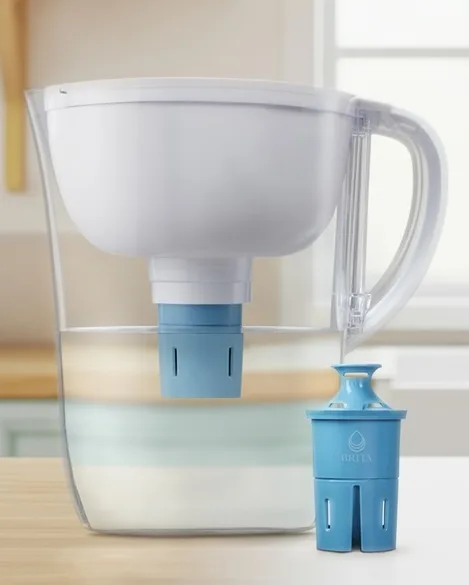

10 Things Brita Pitcher Filters Reduce From Your Water
Cleaner-tasting water starts with reducing the everyday stuff you can smell and taste—and the contaminants you can’t see. (A contaminant is any substance you don’t want in tap water—whether it affects flavor, clarity, or, at certain levels, your health.) Brita pitcher filters are designed to do both: they cut chlorine taste and odor, plus reduce key heavy metals and other compounds. The result is great tasting water you can feel good about while helping you cut back on single-use plastic bottles.
Below are ten things Brita pitcher filters reduce from your water, and where the Elite filter goes further.
Why Brita: Better Water
1. Chlorine taste and odor
Chlorine is a disinfectant added by water utilities to keep water safe on its way to you. It can leave a bleach-like taste or that pool-like smell. Brita Standard and Elite pitcher filters use activated carbon to reduce up to 99% of chlorine taste and odor in testing, which is how this filtered water tastes better than tap. They’re both certified NSF/ANSI 42 for chlorine tastes and odor reduction.
2. Lead with the Elite filter
Lead is a toxic metal that can leach into tap water through older service lines, solder, or fixtures. Even low levels matter, especially for kids. Brita’s Elite filter is NSF/ANSI 53 certified to reduce up to 99% of lead in testing when replaced per the instructions. If minimizing lead is a priority for you, go with the Elite filter.
3. Mercury reduction
Mercury is a liquid metal pollutant that can enter water from industrial sources or older plumbing materials. Certain Brita pitcher filters, including the Elite filter, are certified to reduce mercury by up to 95% in testing. This means another layer of protection with improved taste and odor.
4. Cadmium reduction
Cadmium is another toxic heavy metal that can show up in groundwater due to industrial runoff or natural deposits. In independent testing, Brita pitcher filters reduced cadmium in the range of roughly 91-99%, depending on your tap water conditions. Replacing your filters regularly helps maintain this level of performance.
5. Copper from plumbing sources
Copper is an essential mineral, but higher levels—often from corrosion in home plumbing—can leave water tasting metallic. Brita filters can reduce copper by roughly 73% in testing, helping your water taste less bitter after filtration.
Also reduced by Brita filters:
-Zinc (helps reduce metallic taste)
-Iron-related particulates that can cause a ferrous taste and color
6. Certain pesticides and herbicides
Pesticides and herbicides can reach water supplies from agricultural runoff. The Brita Elite filter is NSF/ANSI 53 certified to reduce defined pesticides like atrazine and simazine. This adds another layer of coverage with heavy metal reduction.
7. Some pharmaceutical residues
Trace amounts of medications are sometimes found in municipal water. The Brita Elite filter is NSF/ANSI 401 certified to reduce select emerging contaminants, including some pharmaceuticals like ibuprofen, atenolol, and carbamazepine. This certification targets microscopic, parts-per trillion (ppt) levels for added peace of mind.
8. Microplastics and asbestos
Microplastics are tiny pieces of particles 0.5 – 1 µm. Asbestos can appear as microscopic fibers from older pipes or water mains. Brita Elite filter and selected filters are NSF/ANSI 53 certified for particulate reduction in the 0.5–5 micron range, helping capture many microplastics and certain asbestos fibers.
9. Suspended particulates and turbidity
Turbidity is the cloudiness you see when fine particles—like silt, rust, or sediment—are floating around in water. All Brita pitcher filters trap these particles, helping the water look clearer, and many people also describe a “cleaner” taste after filtration.
FAQs
Do Brita filters remove fluoride from water?
No, Brita filters do not remove fluoride. Fluoride levels typically remain unchanged after filtration.
Can Brita filters remove bacteria or viruses?
No. Brita filters are designed for chemical and particulate reduction, not for removing bacteria, viruses, or other microorganisms.
How often should I replace my Brita filter?
Replace the Standard filter approximately every 2 months and the Elite filter every 6 months, or sooner if water flow slows or taste changes.
Do Brita filters remove all PFAS or forever chemicals?
Brita Elite filters reduce certain PFAS compounds like PFOA and PFOS, but they are not certified to reduce all PFAS.
What doesn’t a Brita filter remove?
Brita filters don’t remove fluoride, nitrates, arsenic, or microbial contaminants such as bacteria and viruses.